Rust solo survival next to Oil Rig shows how one player holds ground against a full raid
You can order the same kind of articles for your own video to boost it on YouTube and Google. Just message the Telegram bot @sat_sit_bot. The bot writes and publishes the articles itself (with your YouTube video embedded) on popular topical websites (no ads). Your first 50 articles are free.
· based on the channel Blooprint
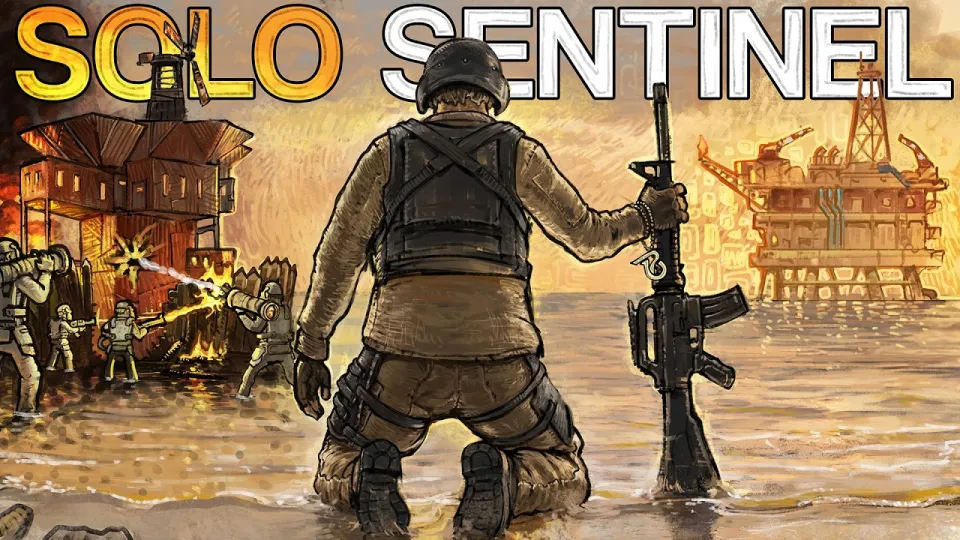
Rust solo survival is about turning a single player's limited time and resources into a defensible position, and the clearest example is building right next to Oil Rig so that every monument run and every fight happens on your own doorstep. In Blooprint's solo story "The Solo Sentinel", one player claims that ground on a fresh wipe, snowballs loot from the monument, upgrades the base and then holds it against a rocket raid. The same live survival and PvP gameplay continues on Blooprint's Twitch channel, where you can watch the next wipe unfold in real time.
What makes a solo base next to Oil Rig so strong in Rust
Oil Rig is one of the highest-value monuments in Rust, and living beside it compresses travel time to almost nothing. A solo who spawns close can hit the monument early, take the crate loot and elite crate loot, and be back behind walls before a group has finished gearing up. The position also creates a constant stream of visitors: small groups boating in for oil, duos farming the scientists, and raiders looking for an easy target. For a solo, that traffic is both the threat and the opportunity, because every failed attack leaves gear, components and explosives behind.
The trade-off is visibility. A base on the shoreline near Oil Rig is seen by everyone who sails past, so the build has to survive being scouted. That means stone or metal core walls early, a compact footprint that is cheap to upgrade, and turrets covering the water approach rather than the front door. In the video the base is upgraded and fitted with turrets late at night, which is exactly the window when most raids on small bases start.
The solo snowball from fresh wipe to a loaded base
A Rust solo snowball works because each small win funds the next one. The pattern in this run follows a recognizable order:
- Land near the target monument and secure a starter base before the first night.
- Farm the monument for crates and components while avoiding full groups.
- Convert early loot into a workbench and better weapons rather than hoarding it.
- Upgrade walls and add turrets once the base starts attracting attention.
- Use the base's position to take fights on your terms, with a respawn and a locker nearby.
The result is a base that looks modest from outside but holds enough gear to defend itself. Viewers often point out that watching a solo reach a loaded state in a short time is less interesting than the struggle itself, and this run leans into that struggle: failed pushes, gear lost, and the slow rebuild that follows.
Why solo Rust videos connect with viewers more than group content
In a solo video, everything the creator says is aimed at the audience. There are no team comms to fill the audio, so the player narrates the thought process: why this base spot, why this fight, why this upgrade order. That play-by-play is what makes solo Rust readable for people who do not play the game themselves, and it is the reason a large share of the audience asks for more solo uploads instead of four-man snowball series.
Solo content also puts personality first. A group video spreads attention across several players, while a solo run rises or falls on one voice and one set of decisions. The trade-off is that solos lose more often, and the losses are shown in full, which is precisely what makes the wins feel earned.
How the base defense against a rocket raid plays out
Raiding a solo base next to Oil Rig is not the easy job it looks like. Attackers arrive by boat or over water, which exposes them to turret fire and to a defender who can flank from below. In this run the raid comes late at night, with rockets aimed at the base while the owner is still upgrading and placing turrets, and the defense turns into a close fight rather than a clean break-in.
A few principles decide that kind of fight:
- Turrets placed before the raid force attackers to waste rockets on them or take damage while repositioning.
- Multiple loot rooms and sealed compartments mean a single breach does not end the wipe.
- The defender's spawn is closer than the attackers' respawn, so every trade favors the solo.
- Water approaches can be covered with traps and external walls, which slows a boat landing.
Even when the defense does not end in a clean wipe of the attackers, the raid cost is real: rockets, explosive ammo and time spent on a target that fights back.
Common questions and doubts about solo Rust runs
One recurring doubt is whether solo content can stay interesting without teammates to bounce off. The answer in this run is structure: a fixed base location, a clear progression from starter to turreted compound, and a raid as the climax. Another doubt is whether a base next to Oil Rig is viable for an average player, not just an experienced one. It is, but it demands discipline: keep the footprint small, upgrade the core first, and never leave the base unlocked while farming the monument.
A third theme is the randomness of wipe day. A good pull on loot or a lucky early fight can decide the whole run, and a bad one can end it in the first hour. The video acknowledges that luck openly instead of pretending every wipe is a skill showcase.
All Blooprint links from the video
- Twitch live streams: https://www.twitch.tv/blooprint
- Kick: https://kick.com/blooprint
- TikTok: https://www.tiktok.com/@blooprintgames
- Twitter: https://twitter.com/blooprintgames
- Discord community: https://discord.gg/blooprint
What this solo run teaches about holding ground in Rust
Building next to Oil Rig is a statement: you accept constant contact in exchange for fast loot and fights you can choose. Blooprint's run shows the full arc of that decision, from a fresh-wipe snowball to turrets going up at 3:30 AM and a rocket raid answered from inside the walls. The lesson is not that a solo can beat a group every time, but that a well-placed, well-sealed base makes a solo expensive to remove. If you want to see the next attempt live, follow the action on Blooprint's Twitch channel and catch the wipe from the first minute.
Key takeaways
- Blooprint's solo run is built around a base placed directly next to Oil Rig, giving fast access to the monument's loot and constant traffic from other players.
- The run covers a full wipe arc: fresh-wipe snowball, base upgrade, turret placement and a defense against a rocket raid late at night.
- Solo play means every call is narrated to the viewer, which is the main reason fans ask for more solo videos over group content.
- The video was published on 13 July 2026 by the channel Blooprint and is presented as a story of a solo holding his ground.
- Blooprint streams live on Twitch at twitch.tv/blooprint, where the same survival and PvP style continues outside edited videos.
Questions & answers
Is it viable to build a solo base right next to Oil Rig in Rust?
Yes, if the base is compact and upgraded early. The advantage is near-zero travel time to a high-tier monument and constant opportunities to loot players who come for oil. The risk is visibility, so the core should be stone or metal before the first night and turrets should cover the water approach rather than the front door.
Why do viewers prefer solo Rust videos over group snowball series?
Solo videos keep the narration focused on the audience, because there are no team comms to fill the audio. The player explains each decision, from base placement to upgrade order, which makes the run easier to follow for people who do not play Rust themselves. Group videos spread attention across several players and often skip the struggle that makes a solo run engaging.
What should a solo do when a rocket raid starts on a small base?
Use the defenders' advantage: stay inside sealed compartments, let turrets absorb or delay the rockets, and trade only when the attackers are exposed on the water approach. Multiple loot rooms mean one breach does not end the wipe, and the solo's closer respawn makes every trade favorable.
Does a solo run depend more on luck or on skill?
Both matter, and the video does not hide it. A strong early loot pull or a lucky first fight can fund the entire wipe, while a bad start can end the run in the first hour. Skill decides how much value is extracted from that luck through base placement, fight selection and upgrade timing.
Source: The Solo Sentinel - Rust · Markdown version